

We and our co-authors have just published our new paper “Coastal and inland American alligators (Alligator mississippiensis) diverge along physiological axes in response to a salinity gradient” in JEB. The paper was the culmination of seven years of work and countless collaborations.
By Johnny Konvalina and Eric Hoffman
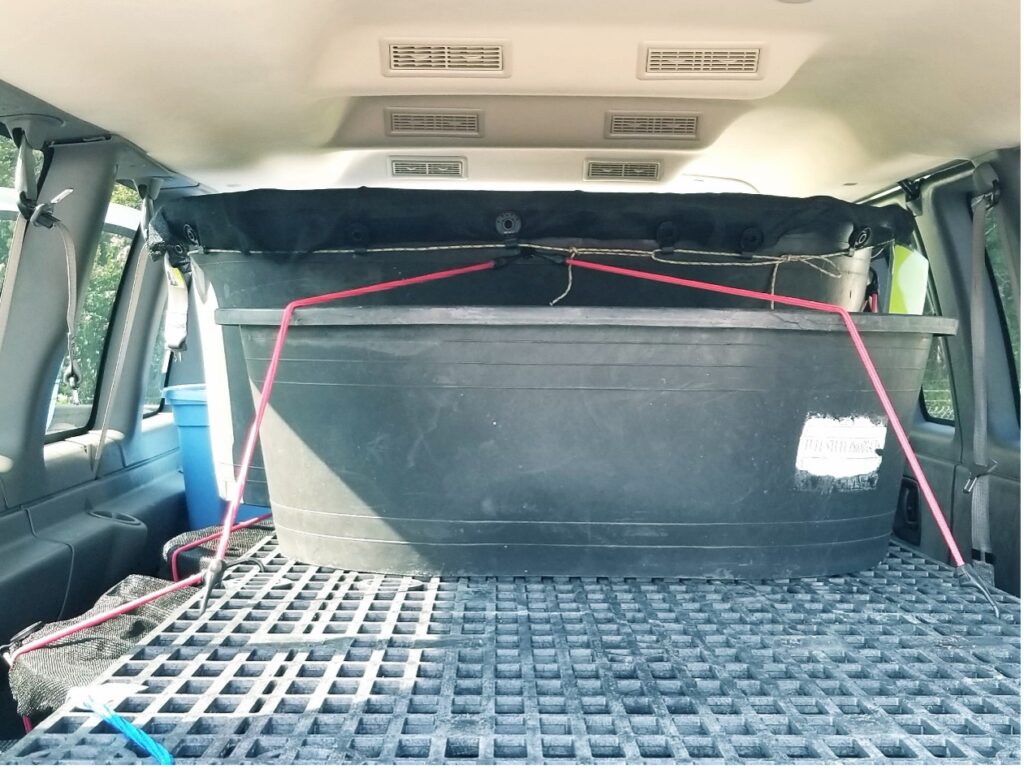
In this paper, we asked “When exposed to a salinity gradient, will coastal alligators have different physiological responses than inland alligators?” To answer this question, we decided to use juvenile alligators, which required getting IACUC (Institutional Animal Care and Use Committee) approval. Extensive paperwork was necessary for this experiment as we had to obtain multiple permits from various states to capture, transport and house the juvenile alligators. To transport the alligators from the capture locations to our holding facility, we removed the seats from a 15-passenger van to make room for our holding tanks. Using a dunnage rack, we were able to double the number of tanks we could load into the van (Figure 1).
We drove the van from Orlando, FL to two sites (one inland, one coastal) in Louisiana to capture the alligators. We worked with Ruth Elsey from the Louisiana Department of Wildlife and Fisheries (LDWF) to collect coastal Louisiana alligators from Rockefeller National Wildlife Refuge and John Hanks from LDWF to collect inland Louisiana alligators from Lake Bruin. During transport, we placed the alligators in large holding tanks with mesh covers. After the 12-hour drive from Louisiana back to Orlando, we immediately measured, sexed, and weighed each alligator before placing them in an acclimation tank. These tanks were the same tanks we used to transport the alligators and were filled with freshwater.
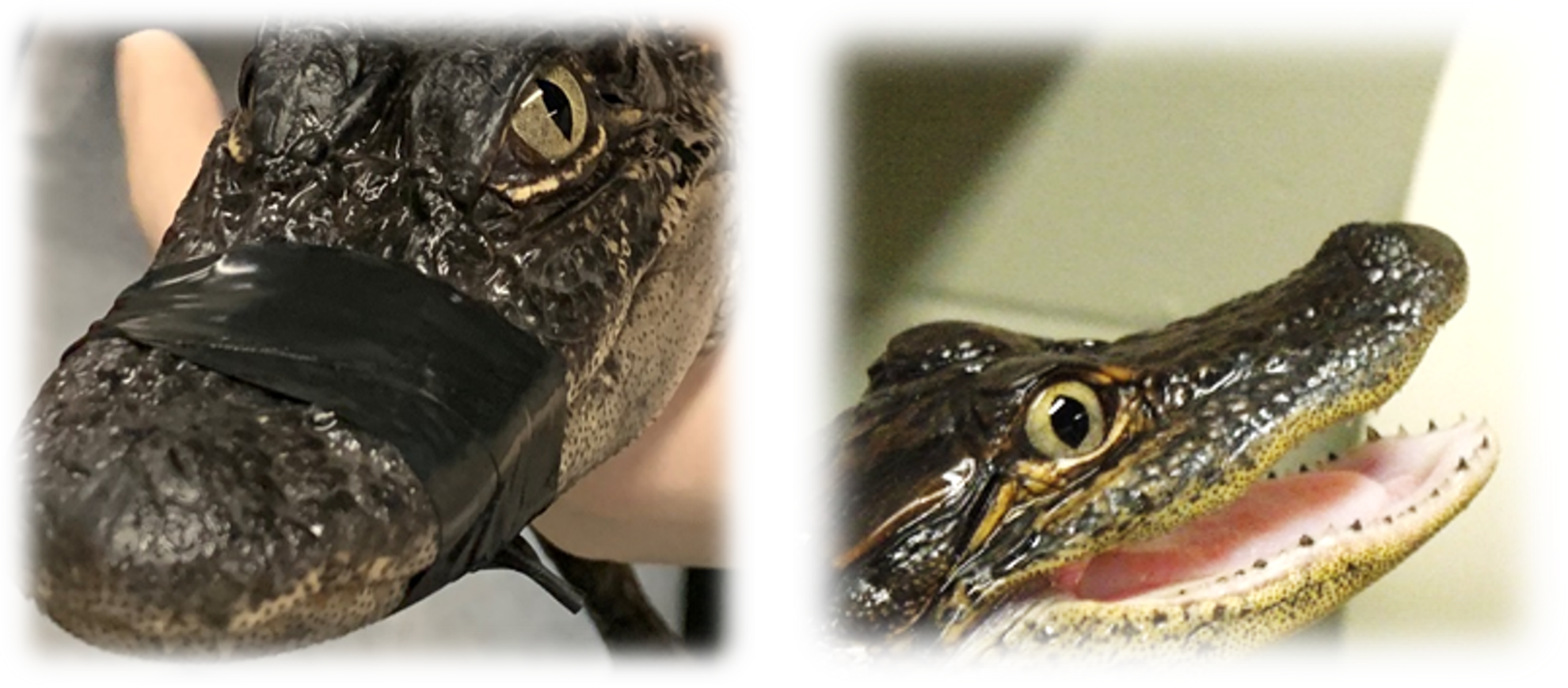
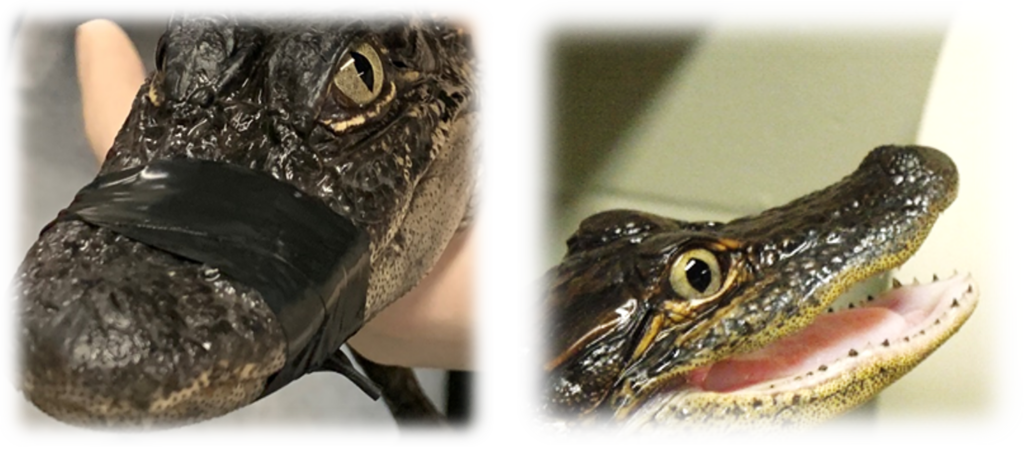
We noticed that when we entered the holding room the alligators would constantly hiss and exhibit stressful signals such as slitted pupils (Figure 2). To acclimate the alligators to our presence we brought in crocodilian expert Flavio Morrissiey who showed us how to habituate the alligators to our presence. Within a week, the alligators ceased hissing when we entered the room and showed dilated pupils (a sign of a relaxed state, Figure 2).
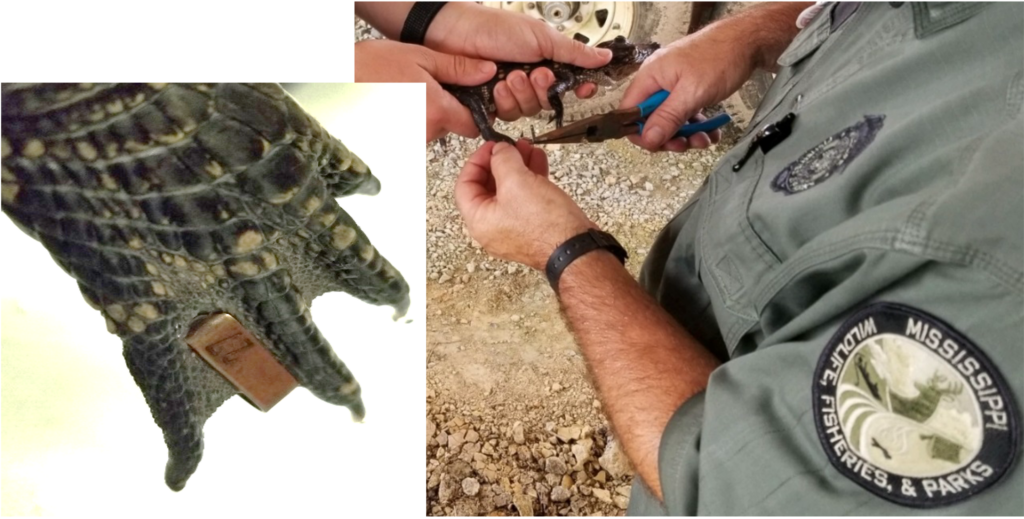
A month later, we went to Mississippi and with the help of Ricky Flynt and the Mississippi Department of Wildlife, Fisheries and Parks we captured alligators from coastal (Old Fort Bayou) and inland (Ross Barnett Reservoir) locations. To identify individual alligators, we used metal toe tags (Figure 3).
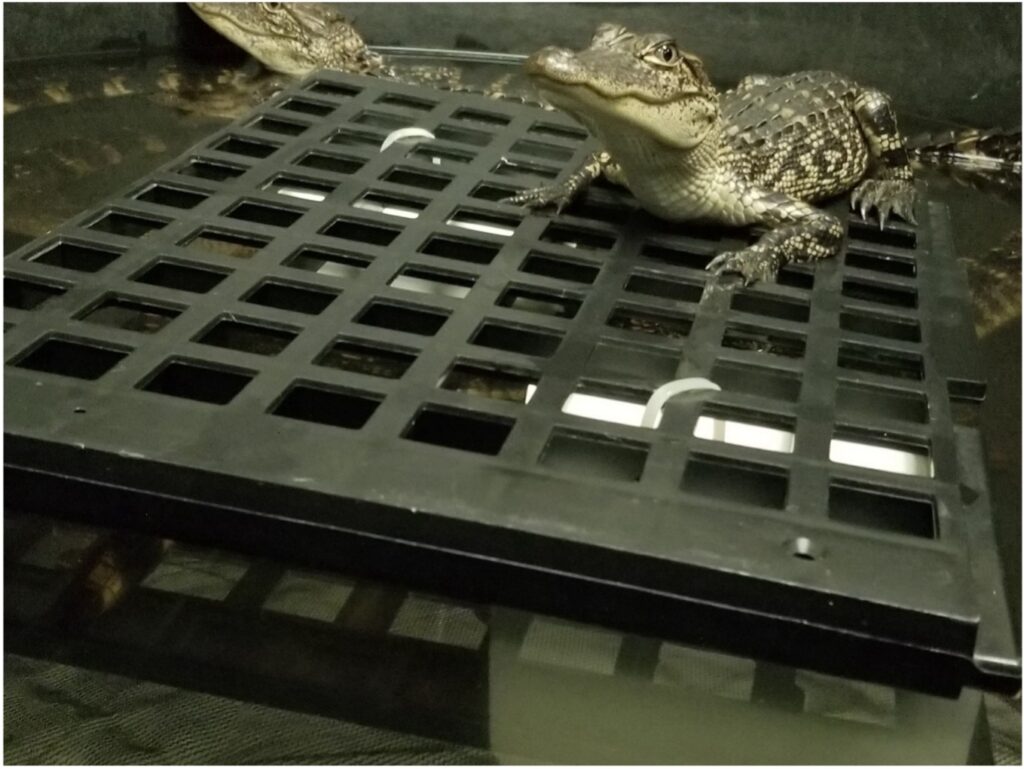
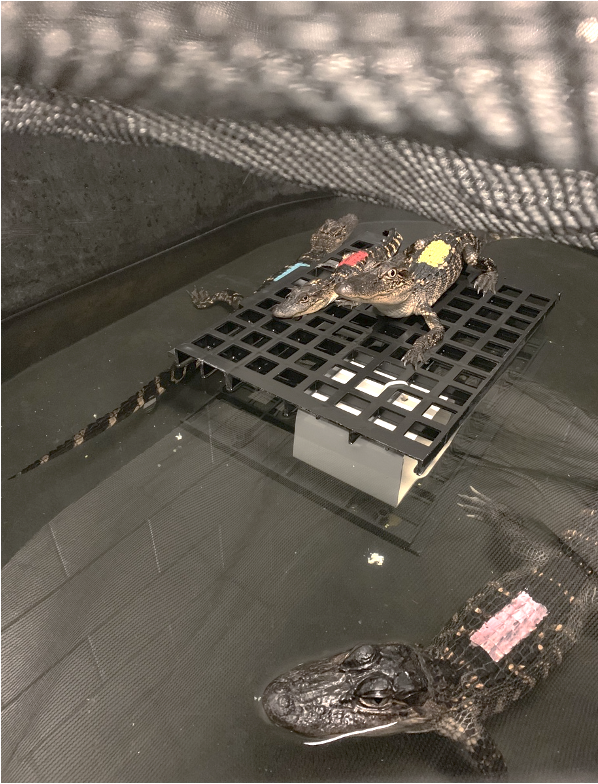
After an acclimation period in freshwater (0 PSU), we put the alligators in experimental tanks of varying salinities (0, 10, or 20 PSU) with four alligators per tank (one from each capture location). We placed a stand in the tanks for enrichment purposes and noticed the alligators using them (Figure 4).
We wanted to look at behaviour, so we painted the backs of the alligators with non-toxic fingernail polish to identify them by capture location (Figure 5).
In addition to behavior, we also measured the amount of sodium in the alligators’ blood, the diameter of various tubules in the kidney and liver, and gene expression in both the kidney and liver. Although we did not find large population genetic differences between coastal and inland alligators, we did find many physiological differences between the two groups. Coastal alligators had slightly higher sodium levels in their blood across all salinities and their kidneys were better able to handle the large influx of salt caused by high salinity levels. Gene expression in coastal alligators was mostly involved in metabolism, showing that coastal alligators adjust their metabolism in ways that help them cope with saltier environments.
Overall, we found that even though coastal and inland alligators are not that genetically different, their bodies respond differently to salt. This experiment provides evidence that ecotypes can show large physiological divergence in response to an environmental gradient.
We hope you enjoy reading our paper as much as we enjoyed doing the project!